



What a Business Strategy Book Taught Me About Why Most Lifters Never Reach Their Potential
I picked up a book about organizational strategy and ended up reading a chapter-by-chapter breakdown of every training mistake I made for the first decade of my career.
I read a lot of books that have nothing to do with lifting. Always have.
Some of the best training ideas I ever had came from business books, psychology, and organizational theory. Not because I was looking for a crossover. But because when you've spent decades under a bar, you start seeing the same patterns everywhere.
A few weeks ago I finished a book called Ignition: The Art and Science of Strategy by Dr. Kathryn Ritchie. It's a business strategy book. Focused on why organizations have solid plans on paper and still fail to execute them. Why teams disengage. Why momentum stalls. Why the gap between what you intend to do and what actually gets done is so wide you could drive a truck through it.
By chapter three, I had stopped thinking about corporations and started thinking about lifters.
By the end, I had a pretty clear picture of why most people who train never reach anywhere close to their potential. Not because they lack talent. Not because they lack access to information. Because they have a strategy problem. More specifically, an execution problem. And the two are not the same thing.
One of the central arguments in the book is that most organizations confuse the strategy document with the strategy itself. They build a solid plan, present it, feel good about having done the work, and then wonder why nothing changes. The plan sits in a folder. Execution stalls. The gap between intent and action grows.
Sound familiar?
I've watched this happen in gyms my entire career. Someone comes in with a 16-week program they spent three hours building. It's detailed. Exercise selection, percentages, rep schemes, accessory work, and deload weeks. Every box is checked. They hand it to me and ask what I think.
I ask one question: "What are you going to do when week four doesn't go the way you planned?"
Most of them don't have an answer. Because they built a plan. They didn't build a training process.
There's a difference.
A plan assumes the path is straight. A process accounts for the mess. And training is messy. Bodies break down. Life intervenes. Numbers on week seven don't match what the spreadsheet says they should. The question isn't whether things will go sideways. The question is whether your process can absorb it and keep moving.
The program isn't the training. The program is the scaffold. Training is what happens when you show up and execute in real conditions.
Ritchie writes about organizations that treat strategy like a presentation requiring approval. They do the analysis, map it out, feel satisfied, and never close the gap between planning and doing. That's the lifter who builds an elite-level program and abandons it at week six because a session felt off.
The framework Ritchie builds the book around is simple. She calls it the Three Enoughs: enough clarity, enough cohesion, enough discipline. Not perfect. Enough.
When I read that, I thought about how many lifters I've watched fail because they were chasing perfect instead of enough.
They change programs every six weeks because they're not sure if what they're running is optimal. They never develop clarity on what they're actually training for. They want to hit a 700-pound squat but they're also trying to lose twenty pounds and run a 5K and they rotate through four different training systems because they've heard arguments for all of them. That's not a clarity problem. That's an everything problem. And when you're trying to solve everything, you solve nothing.
- Enough Clarity means you know what you're training for. One goal. One general direction. Not perfect certainty. Just enough to make decisions.
- Enough Cohesion means your training environment supports what you're trying to do. The people around you, the equipment you use, and the culture of your gym. Cohesion is why certain gyms produce what they produce. Not because they have the only valid training system. Because the people in that room are all pulling in the same direction.
- Enough Discipline means showing up and executing the process. Not just on the good days. Especially on the bad ones. Not the motivation to train. The habit of training regardless of motivation.
Most lifters have one of the three. The ones who advance for years have all three operating at a functional level.
The Takeaway: Clarity tells you where you're going. Cohesion means your environment is aligned to get you there. Discipline is showing up and doing it anyway. You don't need all three at 100%. You need enough of each.
There's a line from the book that stopped me cold: strategy without culture is hollow, and culture without strategy is aimless.
Swap "strategy" for "program" and you have the best one-sentence explanation of why gym culture matters more than program selection.
I've said for years that Live, Learn, Pass On isn't a slogan. It's the operating system. It's what decides how people behave when no one is watching. Who do they ask for help? Whether they're willing to be corrected. Whether they push harder when someone else is in the gym or coast when they train alone.
A weak culture produces inconsistency. People don't know what's expected. Nobody pushes each other. The energy of the room is neutral at best, toxic at worst. And a great program dropped into a weak training culture will produce mediocre results. I've seen it hundreds of times.
A strong culture produces results with a program that might not be considered optimal on paper. Because the culture enforces the behaviors the program requires. People show up. They push. They hold each other accountable. They don't accept coasting.
Who you train with matters as much as what you train. The program is visible and measurable. The culture decides whether it gets executed with everything you have or sixty percent of it.

One of the most useful concepts in the book is what Ritchie calls the Middle Ground. The space between your high-level goal and the micro-level doing. The gap between where you're trying to go and what you're doing in the gym today.
That gap is where most training falls apart.
Most lifters have no Middle Ground. They have a goal, and they have today. And when today doesn't connect cleanly to the goal, they either force through it and accumulate damage or they bail and lose training consistency.
Building your Middle Ground as a lifter means answering questions most people skip:
- What are the markers that tell you training is on track? Not just total weight on the bar. Movement quality, recovery, joint feel, energy levels.
- What is your plan when something breaks down? Not if. When. The lifter who has thought through contingencies in advance makes smarter decisions under pressure. The one who hasn't defaults to gutting through or quitting.
- What are the cultural filters you're running your training decisions through? Are the people around you reinforcing good training habits or excusing ego decisions?
- How are you capturing and using what you learn from each training block? Or are you just logging weights and moving on without ever analyzing the pattern?
The answers are your Middle Ground. They're what separates a training program from a training process.
The book makes a point I've lived for forty years in this sport. Strategy is not linear. It doesn't follow a straight path from point A to point B. It's iterative. The next decision is informed by what happened last. You plan, you execute, you assess, you adjust.
Good training works exactly the same way.
The Western periodization model looks clean on paper. Twelve to sixteen weeks, decreasing reps, increasing percentages, peak at the meet. The problem is the human body doesn't care about your spreadsheet. You'll have a block where something responds better than expected, and you need to capitalize on it. You'll have a block where recovery tanks and pushing the planned percentages would be idiotic.
This is why a more flexible method makes practical sense for advanced lifters. Constant variation, rotating exercises to drive adaptation, training multiple strength qualities simultaneously rather than isolating them into phases that disappear the moment you move to the next block. Not because linear periodization is wrong. Because it assumes a level of predictability that real life consistently refuses to cooperate with.
The best coaches I've been around think in systems, not scripts. They have a direction. They have clear principles. And within that framework, they read what's actually happening in front of them and adjust. That's not abandoning the plan. That's executing the process.
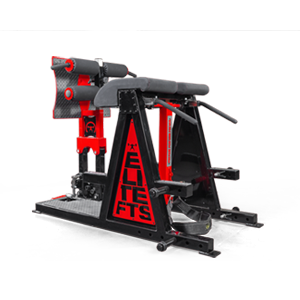
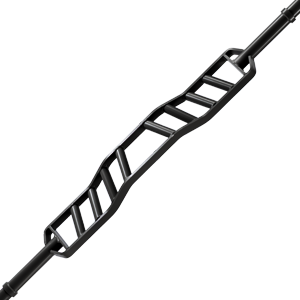
On equipment: The tools need to match the process. Our specialty bars, bands, and racks and cages are built to support serious, long-term training. But the tool only matters if the process around it is solid.
Here's the part of the book I kept coming back to. Ritchie argues that the gap most organizations face isn't a strategy gap. It's an execution gap. They have vision. They have direction. They can articulate where they're going. What they can't do is consistently close the gap between intention and action.
Forty years of watching lifters fail to reach their potential has taught me the same thing.
The information problem in strength training is essentially solved. You have access to more quality programming, coaching advice, equipment guidance, and technical information than any generation of lifters before you. That's not the issue. The issue is the execution gap.
You know what periodization is. You know the principles of progressive overload. You know that you need to eat enough to support training, sleep enough to recover, manage your stress load, and handle your weaknesses instead of just training your strengths.
Knowing it and doing it are not the same thing.
The lifters who close that gap develop systems that support consistent execution over time. Not systems that work when they're motivated. Systems that work on the days they don't want to be there. Systems that account for real life, real fatigue, real schedule constraints. Systems where the culture around them reinforces execution rather than excusing inconsistency.
If you recognized yourself in any of this, here's the practical application.
Start with the clarity question. What are you actually training for right now? One answer. If you have more than one, you don't have enough clarity yet.
Then look at your environment. Are the people around you pulling your training in the direction you need? Is your gym culture one that reinforces execution and holds you accountable? If not, something needs to change.
Then look at your Middle Ground. Do you have a process for the sessions that go sideways? A method for tracking progress that gives you real feedback? A contingency plan for when something breaks down?
If those three things are in place, your program almost doesn't matter. Any reasonable program built on sound principles will produce results if you execute it consistently inside the right environment with enough clarity about where you're going.
If those three things aren't in place, the best program ever written won't save you.
Get the process right. The results follow.