


You’re Training Athletes, Not Lifters
I had those days, especially early on in my career, that I didn’t understand why the athletes weren’t as enthusiastic as I was at 6 AM. I mean, what the hell is better than getting up early and training your ass off?
Strategic Variation: The Misunderstood Key to Long-Term Growth
Muscle growth doesn’t happen overnight. So, instead of thinking you have to hit every fiber from every angle right now, realize that hitting them all over the course of several months will be far superior for your results, keep you progressing indefinitely, and help you to avoid injury.
Begin Your Journey to Become a BAMF Wrestler
I am excited to share highlights of early discussions that Steve Konopka and I have had as we work to turn our shared vision into a reality, helping athletes along in their journeys to become BAMF wrestlers.

Total Body Conjugate 8-Week Program
This eight-week sample program is a snapshot of a few cycles written for a former competitive weightlifter (local/state level). Michael wanted to get back into shape, lose weight, and include some weightlifting movements.

WATCH: The Seven Granddaddy Laws
Dr. Hatfield categorized these Laws himself, and together they serve as a framework to measure an effective training program. If you want to know how your training program stacks up, I encourage you to assess it against the Laws.
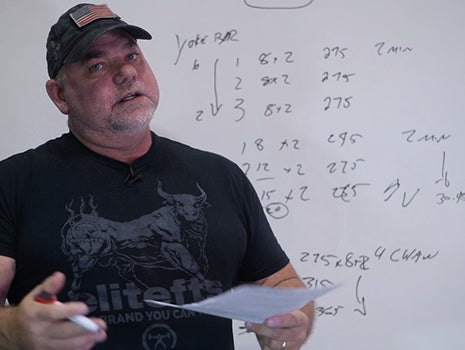
WATCH: Max Effort and Dynamic Effort Programming
In this instructional video, Dave discusses the benefits of dynamic effort and max effort training and breaks down the specifics of his programming during his work with Dr. Rusin.

Samoan Rugby Union Returns to CARE Program
The program I am currently running features the CARE program in a new format that I feel better allows the player to get a workout in without going too deep in the RPE continuum, especially if he or she is coming from a unit or a team session.

New Team, New Approach: Working the Curve with the Samoan Rugby Union
What I outline in this article is the third generation of this style of programming, taken through the furnace of professional rugby and modified accordingly to fit specific needs of the playing group I now work with.
What’s Missing in Box Programming
At the end of the day, 99.9% of people who show up at a box do not want to increase their snatch or compete at the games. Here's a better way to help them.
A Training Cycle Alternative for Group Athletes
Linear periodization has its place, and I've used it with varying levels of success, but overall there are simply too many drawbacks when used for group programming. Here's what I use instead.
Cultivating Champions: How I Trained the C2 Volleyball Team
All of the athletes at this high-level volleyball academy are from overseas and come to the United States to get a better chance at receiving a collegiate scholarship. Working with head coach and founder Caitlyn Vann, this is what we did in our five short weeks.
The Coach's Guide to Programming and Periodization: Surfing The Force-Velocity Curve and Changing Seasons
Understanding this tool for manipulating training intensities is key for athlete programming at every part of pre-season, in-season, post-season and off-season phases.
Here are Team elitefts' New Year's Resolutions for 2019
If you're looking for a way to keep your strength up without destroying your body day in and day out, this is the program for you.
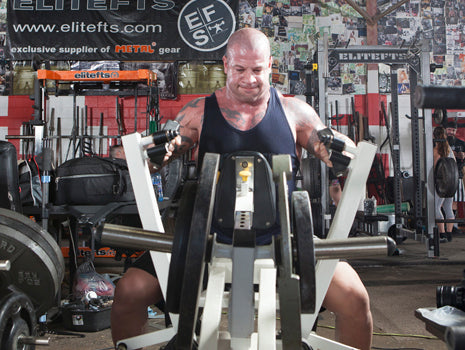
Maximize Effective Volume and Minimize Junk Volume (with Program Sample)
There is a muscle protein synthesis threshold, and adding sets over and above this threshold will not help you gain additional muscle. A simple way to ensure you aren't wasting your time and energy on junk volume is greater frequency.
The Coach's Guide to Programming and Periodization: Variable Manipulation, Training Units, and Building Your Annual Plan
In the first article of this series we covered the basic principles of programming and periodization. Now let's discuss strategies to manipulate volume and intensity, and start examining the training units used to structure training.
4 Rules of Training Professional Athletes (with Off-Season Program Sample)
Four years ago I got a phone call about training a local kid who had just been cut by the Atlanta Falcons and wanted to make his move back to the NFL. Here are my four rules of training professional athletes and what I did with Roosevelt Nix.
Do You Eat, Sleep, and Breathe School and Sports (Like the Lions)?
When the Gateway Lions Academy approached me a few months ago to train their soccer athletes, I was excited. Almost 100% of them are just pure raw talent, and their skillset and work ethic are unreal.

10 Training Rules to Help You Learn What Works for You
Many of us would like there to be a simple answer or a go-to method to reach our goals in the shortest possible time, but in reality we have to spend time under the bar, do our homework, educate ourselves, and learn what makes our unique profile tick.
The Coach's Guide to Programming and Periodization: Basic Principles and Your Exercise Bank
We can't simply throw random exercises and set and rep schemes on a piece of paper haphazardly and then hope for the best. In this series I will teach you how to write programs, including a coach's assignment for each article.
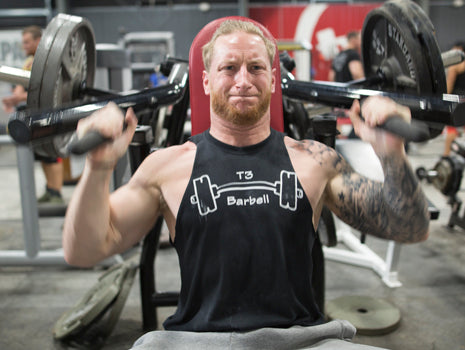
The Role of Individual Differences in Programming
The principles of training are the same for everyone, but the details are different. If you want to learn how to tailor your training by fine-tuning these details, this is the article for you.

Simple Training Has Stood the Test of Time
I want to introduce some new training ideas to accelerate you from good to great by revisiting the past and adding a twist to several favorites.

The Conjugate Method for Group Fitness
Whether it be to feel better, move more weight, or run a marathon, this system has something for everyone. It is the no-brainer preferred choice for group programming.
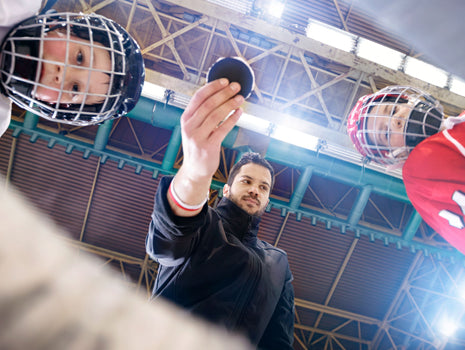
Strength and Conditioning Program for Youth Hockey from the Canadian Ice Academy
This program was designed for our players who spend half a day in traditional school and half a day training with us for AAA GTHL hockey, the premier youth hockey league in Canada.
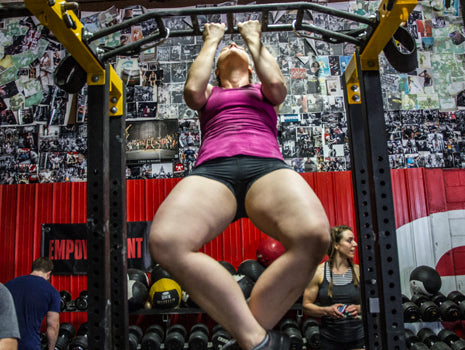
Autoregulation and Variable Adaptation Training
Want continual progress over the long haul? Think of your training as lifting big rocks, pebbles, and sand. Here's how.
