

Foundation: The "Chalkboard" Strategy
The Conjugate Method is often tied in knots by over-explanation, but at its core, the system is ridiculously simple. It originated from a moment of clarity: while watching students sleep through a complex lecture on exercise science, the realization hit—the genius of the system can be summarized on a single chalkboard in ten minutes. It is the "coupling" of three distinct methods of muscle tension into one cohesive week to prevent you from hitting a brick wall.
The roadmap below defines the three pillars of the system:
|
Training Method |
Specific Tension Goal |
Primary Objective |
|
Max Effort (ME) |
Absolute Strength |
Working at or above 90% to master the ability to strain. |
|
Dynamic Effort (DE) |
Explosive Strength |
Moving sub-maximal weights with maximum possible intent. |
|
Repetition Method |
Structural Integrity |
High-volume work to build muscle mass and fix weak links. |
Transition: Before you step under a heavy bar, you must prepare the support systems that will help you withstand the strain.
Phase 1: The Intelligent Warm-Up (Preparation for Strain)
A Conjugate warm-up isn't about "getting loose"; it’s about specific activation and spinal distraction. Most lifters have "sleepy" glutes and compressed spines. We use a circuit-style approach (2–4 rotations) to wake the body and stretch the spine before compressing it under a load.
Core Warm-Up Circuit
-
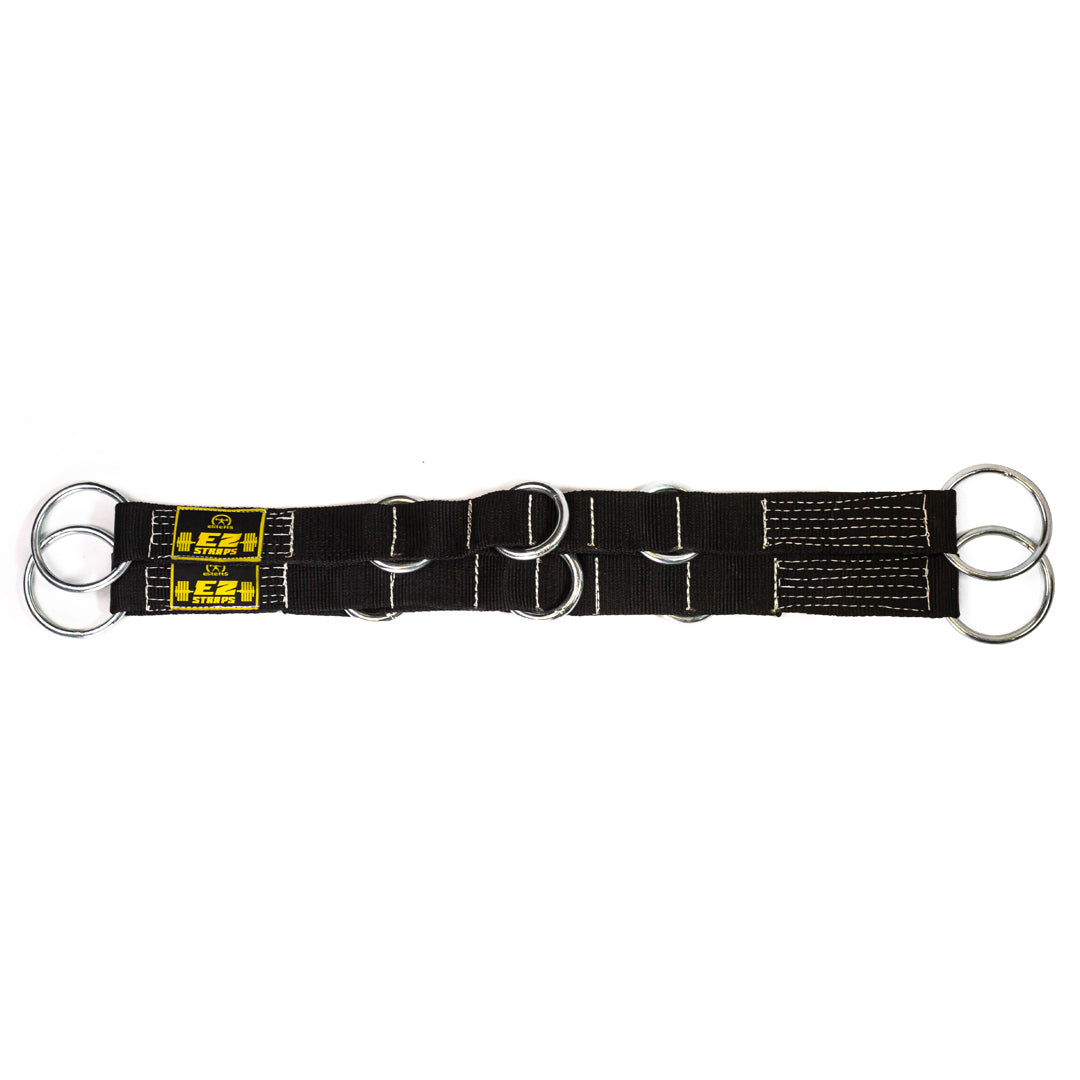
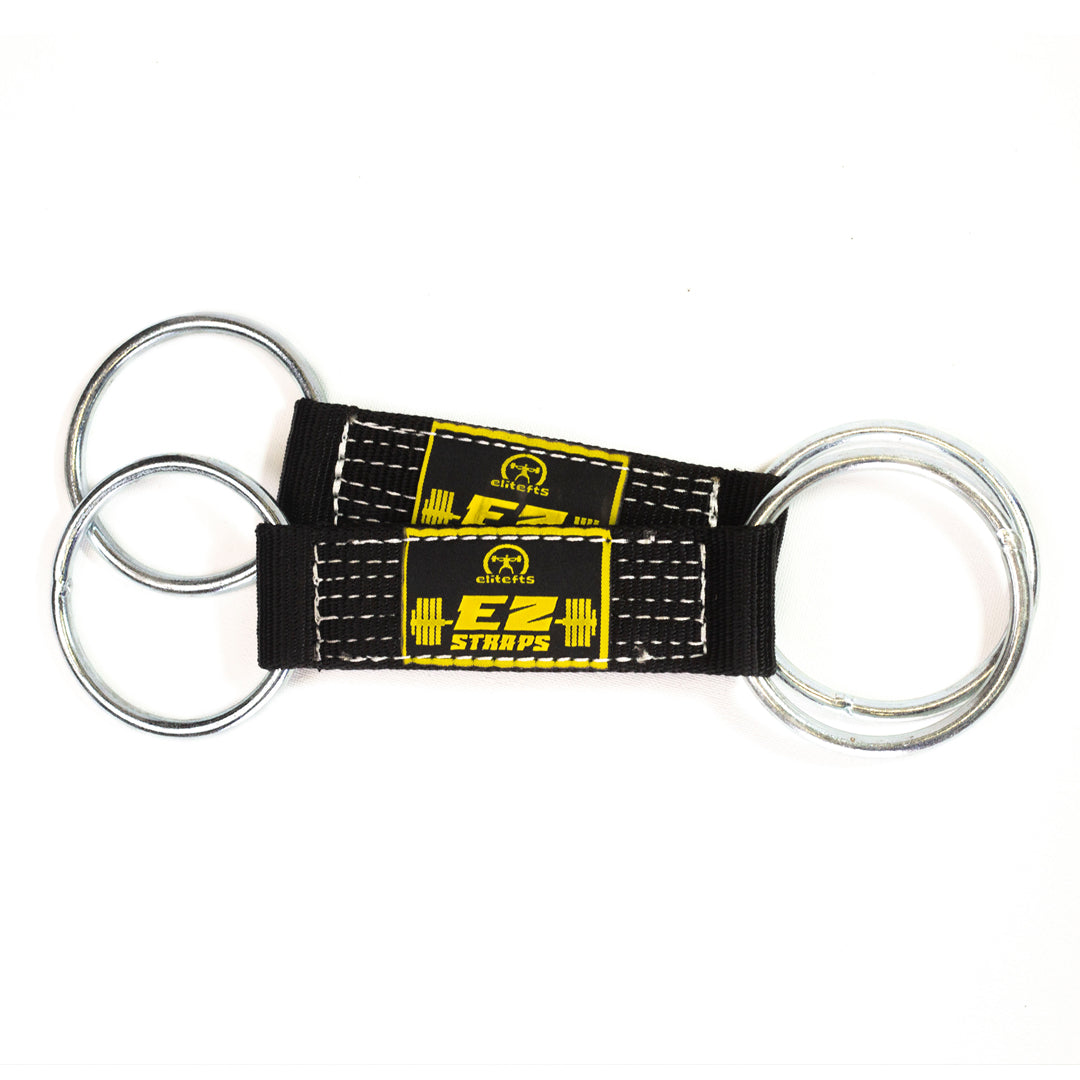
Hanging Leg Raises (with straps): So What? Using straps removes your grip as a factor, allowing the weight of your lower body to pull the spine apart. You aren't just lifting your legs; you're trying to kick the bar at the top while your lower back is distracted.
-
Bent-Knee Reverse Hypers (Unloaded): So What? This gets the glutes firing and the back moving without adding fatigue. It's about movement quality, not weight.
-
Pull-Down Abs: So What? Do not plant your ass against the machine. Let the cable pull your torso up at the top to distract the spine, then round over at the bottom to stretch the Erectors. This is core training and spinal health in one move.
-
Face Pulls: So What? This builds the upper back "shelf." Without a thick shelf of muscle, the bar will crush your spine during a max effort squat.
- Glute Ham Raises (GHR): So What? Even a few reps prepare the hamstrings—the primary drivers of the squat and deadlift—for the violence of the main lift.
The Safeguard Principle Lifters are notorious for skipping "junk work" like abs and back at the end of a session. By placing these movements first, we ensure that the most critical stability work is finished even if you have to leave the gym early.
Transition: With the hips open and the spine distracted, you are ready for the day's primary stimulus.
Phase 2: The Main Lift (Max Effort vs. Dynamic Effort)
This phase is where we build the engine. We alternate between "Heavy" (Max Effort) and "Fast" (Dynamic Effort) days to develop the two ends of the strength spectrum.
Max Effort (ME): The "Heavy" Days
Max Effort is about the "Testers" vs. the "Builders." A Tester is a lift that tells you exactly where you stand (e.g., a suspended good morning). If the weight doesn't move, your training is fucked. A Builder is an exercise that builds the strength needed to move the Tester.
-
Mandatory Rotation: Beginners should rotate through 6–8 basic exercises. Advanced lifters may not repeat a specific variation for an entire year.
-
Intensity & Volume: Work up to a 1-rep max (or a heavy 3–5 for good mornings). Aim for 2 to 4 total repetitions over 90% of your projected max for that day.
- Learn to Strain: The goal is to spend 3–7 seconds fighting through a sticking point. This is neural training.
Dynamic Effort (DE): The "Fast" Days
Dynamic work is performed in 3-Week Waves. You aren't just "moving" the weight; you are using Compensatory Acceleration. If you have 200 lbs on the bar, you must apply 400 lbs of force to move it as fast as possible.
Auto-Regulation: The "Speed Slowdown" Test To find your training weight, start at 45% and add 5% each set. The moment the bar speed visibly slows down, stop. The weight immediately prior to that slowdown is the top of your 3-week wave.
Sample 3-Week Wave (8 Sets of 2 Reps) | Week | Percentage | Execution Cue | | :--- | :--- | :--- | | Week 1 | 50% | Maximum Speed; Focus on the "pop." | | Week 2 | 55% | Maintain speed with increased weight. | | Week 3 | 60% | Peak force production. |
Transition: The main lift reveals the "weak link" in your chain; the next phase is designed to shatter it.
Phase 3: Supplemental Movements (Weak Point Development)
Supplemental movements are compound lifts that strengthen your main lifts. These aren't for the "pump"; they are for building the horsepower needed to strain through a max-effort attempt.
-
The Scheme: Typically 3–5 sets of 3–5 reps.
-
Identify the Weakness: If you don't know your weak point, assume it is your hamstrings (lower body) or triceps (upper body). These are the most common fail points.
-
Specific Examples:
- Lower Body: Weighted GHRs, RDLs, or Pin Pulls.
- Upper Body: JM Press, Rolling Dumbbell Extensions, or Close-Grip Bench variations.
NON-NEGOTIABLE RULE: Lats 4x Per Week
The lats provide the "shelf" for the squat and the "platform" for the bench. Tightness equals stability. You must train lats every session—alternate between vertical pulling (pull-downs) and horizontal pulling (rows) to ensure the back is thick and immovable.
Phase 4: Accessory & Hypertrophy Work (The Builders)
This phase uses the Repetition Method to build actual muscle tissue. This is where you use "bodybuilding methods" like rest-pause, strip sets, or cluster sets to increase density and get the work done fast.
-
Rep Range: 8–12 reps (up to 15-20 for isolation).
-
Lower Body Accessories: Focus on Standing Abs (to reinforce rooting into the ground) and Reverse Hypers (Tight and strict on ME days; Loose and heavy on DE days).
- Upper Body Accessories: Triceps push-downs, rear delt flies, and side raises to build shoulder health and stability.
Transition: The structured work is over; now it's time for "junk work" to keep the mind sharp. Phase 5: Controlled Free Time & GPP
The final 15–20 minutes is "Free Time." This is a window for the athlete to do what they enjoy—prehab, curls, or neck work.
The 3 Golden Rules for Free Time
- Must Be Timed: 15–20 minutes max. Don't turn a training session into a four-hour marathon that ruins your recovery.
- Zero Aggravation: Do not perform any movement that causes pain or irritates an injury.
- GPP Focus: Use this for "junk work" that builds general physical preparation.
Restoration: The 60% Rule
On off-days, use sled dragging or light movement to flush blood into the muscle. To prevent adaptation, follow the 60% Rule:
- Session 1: 100 lbs (The baseline).
- Session 2: 60 lbs (Reduce weight/volume by 60%).
- Session 3: 36 lbs (Reduce the previous session's weight by 60% again).
- Session 4: Reset or take the day off.
The Checklist
|
Method |
Primary Goal |
Execution Cue |
|
Max Effort |
Absolute Strength |
Learn to Strain: Push through the sticking point. |
|
Dynamic Effort |
Explosive Strength |
Compensatory Acceleration: Move it with maximum intent. |
|
Supplemental |
Fix Weaknesses |
Build the Horsepower: Strengthen the compound "links." |
|
Accessory |
Hypertrophy/Stability |
Pump the Muscle: Focus on the tissue, not the weight. |
Final Insight: "Strength is a skill. You already have the strength; the technique gives you the ability to display it." Whether you are a beginner or a seasoned pro, your ability to move the weight depends on your mastery of the barbell and your willingness to strain when the bar stops moving.