


Table Talk #409 | Dr. Dwayne Jackson
The Neural Gap: Six Training Lessons From Dr. Dwayne Jackson
By Dave Tate | elitefts
Dr. Dwayne Jackson has been around. Medical biophysicist. Former professor at one of Canada's top medical institutions. Open-class bodybuilder. Pro motocrosser. Kidney transplant recipient who proceeded to move to the tip of Vancouver Island and train harder than most people half his age.
He was on Table Talk once before. We covered the biopsychosocial model of training, the idea that technical, physical, and psychological variables are not separate categories. They run together. Pull one, and you move the others.
He came back for episode 409. This time we went deeper.
We talked about the gap between what you think you're lifting at and what you're actually lifting at. We talked about the gym as a form of meditation that research supports, but nobody frames it that way. We talked about energy systems, peptides, organ health, and the one thing that will derail every tool and supplement and protocol you stack on top of a broken foundation.
This conversation is for anyone who has hit a wall and is not sure why. It is for coaches who need language to explain auto-regulation to athletes who have never heard the term. And it is for the lifter who has been at this long enough to know that staying in the game is its own performance metric.
Here are the six biggest takeaways.
Takeaway 1: The Neural Gap Is the Foundation of Auto-Regulation
I have been trying to teach auto-regulation for years. The idea that a lifter should be able to read their body, adjust their training on the fly, and make decisions that serve both today's session and next week's session. Most people understand the concept. Very few understand what actually makes it work.
Dr. Jackson gave it a name. The neural gap.
The neural gap is the distance between the RPE you predict before a set and the RPE you actually experience once it is done. Before you step under the bar, you rate the weight. After the set, you rate it again based on what you felt. The difference between those two numbers is your gap.
A beginner's gap is wide. They think a set is an 8 and it is actually a 6. They underperform because they hit a number in their head before they ever touch the bar.
An overtrained lifter's gap runs the other direction. They think the set is a 7 and grind out something that was clearly a 9. They are out of touch with where their body actually is.
A well-developed lifter has a tight gap. Their prediction and their actual experience converge. That tightness is not talent. It is training.
The Drill
Before the set, rate the weight. After the set, rate what it actually felt like. Write both numbers down. Do this consistently, and your central nervous system starts encoding what different levels of exertion actually feel like. The prediction gets more accurate. The gap closes. That closed gap is auto-regulation.
If you are serious about expressing strength at the level it needs to be expressed, your equipment matters too. An elitefts specialty squat bar gives you loading options that match where your body actually is on a given day, not where you wish it were.
Takeaway 2: Velocity Tells You What Your Perception Cannot
RPE is subjective. That is its value and its limitation. Velocity-based feedback gives you an objective check against the subjective read.
When bar speed drops 20 to 25 percent from your baseline on a given movement, that energy system is fatigued. You have pulled what you are going to pull from that system for that session. Trying to stack more work on top of that threshold is not training harder. It is training through a wall that is already down.
This matters because strong-willed lifters lie to themselves. We have all seen it. The athlete who knows something is off but stays on the platform anyway because stopping feels like weakness. What Jackson explained is that velocity data removes the ego from the decision. The bar does not care how fired up you are. When speed drops, the system has spoken.
Pair velocity feedback with the neural gap drill, and you have two anchors working together. One is internal. One is external. When they point in the same direction, the picture is clear.
For the lifter without access to velocity tracking, bar speed is still readable with a trained eye. Film your sets. Watch your warm-up speed and your working set speed side by side. The drop is often more visible on camera than it feels in real time.
Takeaway 3: The Gym Is Voluntary Compartmentalization. That Is a Feature, Not a Bug.
Jackson raced motocross at a high level. He described what it takes to hold a line at speed through a 45-minute moto. One stray thought about something outside the race and you miss a jump. You go down.
That level of forced focus is not dissimilar to what happens under a heavy bar.
The therapeutic community has pushed back on compartmentalization for years, calling it avoidance. Jackson's framing flips that. He draws a line between voluntary compartmentalization and involuntary distraction. Someone doom-scrolling for two hours is also not thinking about their problems. But someone else is choosing where their attention goes. When you train, you deliberately focus on a task that demands all of it. That is not avoidance. That is a skill.
And it carries a downstream biological benefit that scrolling does not. Exercise produces myokines, cytokines released from muscle tissue that reduce inflammation and build systemic resilience. The focused state of training contributes to durable mental health outcomes in ways that passive distraction cannot replicate.
The Point
The gym is not therapy. But done right, it builds the capacity to focus that follows you out the door, into your work, into your relationships, and back into the next session. We have known this for decades. Now we have the mechanisms to back it up.
Takeaway 4: Energy Systems Govern Recovery. Not Willpower.
If you are doing work that falls under ten seconds of effort, three to five reps, heavy compound movements, you are drawing primarily from the phosphocreatine system. That system needs 2.5 to 3 minutes to recover adequately before the next set. Not two minutes. Not one minute because you feel ready.
When you cut that rest and go back to the bar before the system is restored, the next set is not just harder. It is measuring something different. You are no longer testing strength. You are testing your ability to work through energy systems failure.
That distinction matters enormously when you are reading what a training session means. If your reps are dropping set to set and you are only resting 60 to 90 seconds on a maximal effort movement, the drop is not a recovery problem. It is a programming execution problem.
Work capacity is trainable over time. Lifters adapt to shorter recovery windows. But that adaptation takes years, not weeks. And even the best-adapted lifter will see velocity drop, RPE spike, and output decline if they push the energy system past its regenerative capacity in a session.
Rest when the system needs rest. Let the bar be the boss, not the clock.
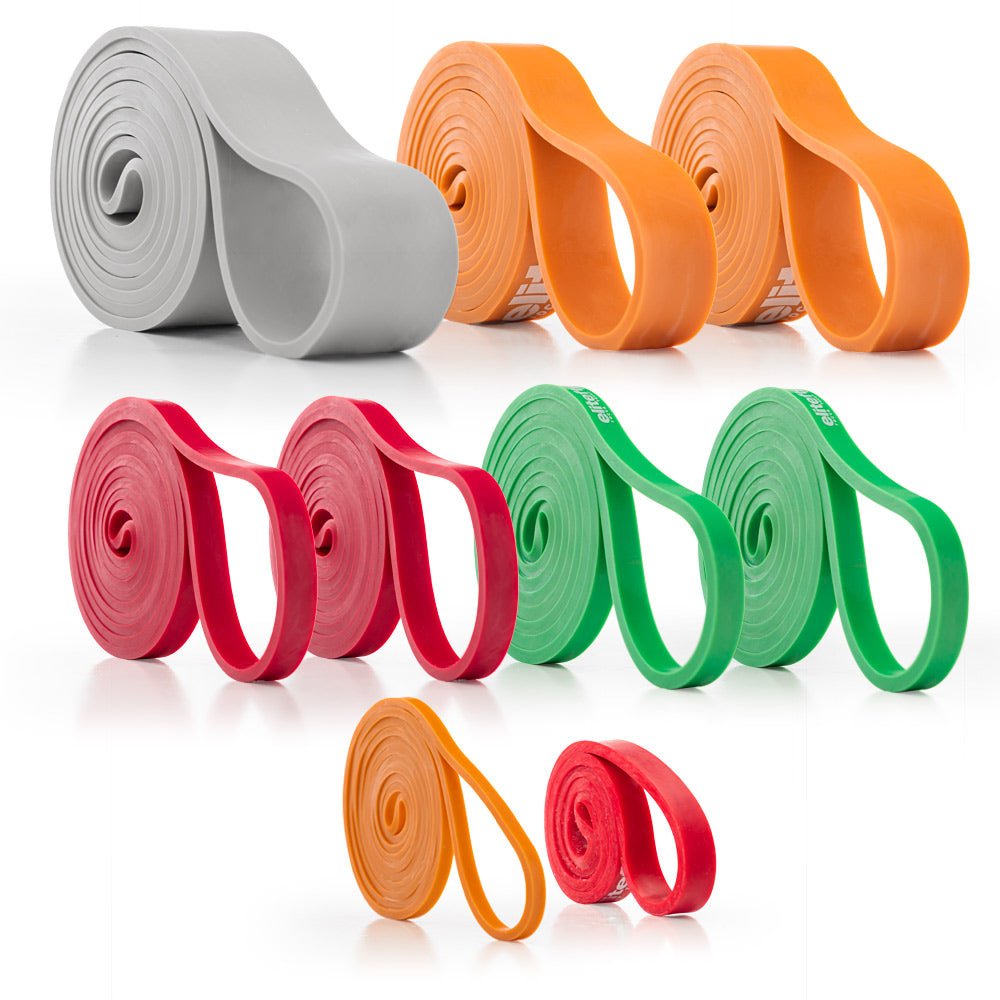
elitefts bands let you manage intensity through accommodating resistance and adjust loading in ways that serve the energy system you are actually training, not just the weight on the bar.
Takeaway 5: The Big Rocks Come First. Every Time.
Jackson has worked with professional bodybuilders, power athletes, kidney disease patients, and cardiac recovery cases. He has seen what happens when athletes try to optimize with advanced tools on a broken foundation.
It does not work.
His framework is straightforward. Before you evaluate any peptide, supplement, recovery protocol, or advanced training variable, you check three things.
The Three Big Rocks
Diet. Are you eating enough? Specifically, enough carbohydrates? Glycogen depletion drives performance decline. Carbohydrates are not optional for a strength athlete.
Sleep. When sleep quality drops, output drops with it. When sleep tanks completely, the right intervention is a deload and a re-feed, not more volume.
Stress. Chronic psychological stress activates the same catabolic cascade as training stress. The body does not distinguish between sources.
Get those three in order. Then, and only then, do incremental additions like specific peptides or advanced periodization have room to show you what they can actually do.
This is not new information in the strength world. It is just the information that gets skipped because it is harder to sell than a bottle of something.
Takeaway 6: Performance Gets Redefined Whether You Do It or Not
Jackson was blunt about what happens to the athlete who refuses to recalibrate as their body changes.
At 22, performance is measurable in pounds and seconds. You train hard, recover fast, push the line, and the cost stays manageable. You feel immortal because the evidence mostly supports it.
At 40 or 50, the evidence stops supporting it. The decisions you made at 22 are showing up in your labs, your joints, your organ function, and your recovery timelines. Jackson learned this firsthand. Stage four kidney failure. Lost a hundred pounds of muscle in nine months to keep his kidneys functional. Then spent years rebuilding from a baseline that looked nothing like where he started.
His definition of performance shifted. Performance became how long he could keep doing what he loves at the highest level his body would sustain.
That shift is not giving up. It is the only rational response to data that is right in front of you.
For lifters still in the building phase, this means something practical. Auto-regulation is not just a tool for today's session. It is a long-term philosophy. The lifter who learns to read the gap, manage recovery, respect energy systems, and build on a solid nutritional foundation is the lifter still in the gym at 60. Not crawling around in it. Actually training.
That is the goal.
Watch the Full Episode. Then Go Train.
Dr. Jackson sat across from me at the S5 Compound, and we went deep. This is the kind of conversation worth watching more than once. The science is real. The application is clear.
Support the podcast and elitefts content by using code TABLE TALK at checkout for 10% off your order.
Shop eliteftsLive, Learn, Pass On. - Dave Tate / elitefts