


The Hidden Cost of "Just Pushing Through"
We’ve all been there: staring down a critical deadline, caring for a newborn, or navigating a high-stress project, all on a dangerously low supply of sleep. The default response is to grit our teeth, chug another coffee, and just "suffer through it." However, this approach not only feels terrible; it also undermines our cognitive function, emotional regulation, and physical performance when we need them most.
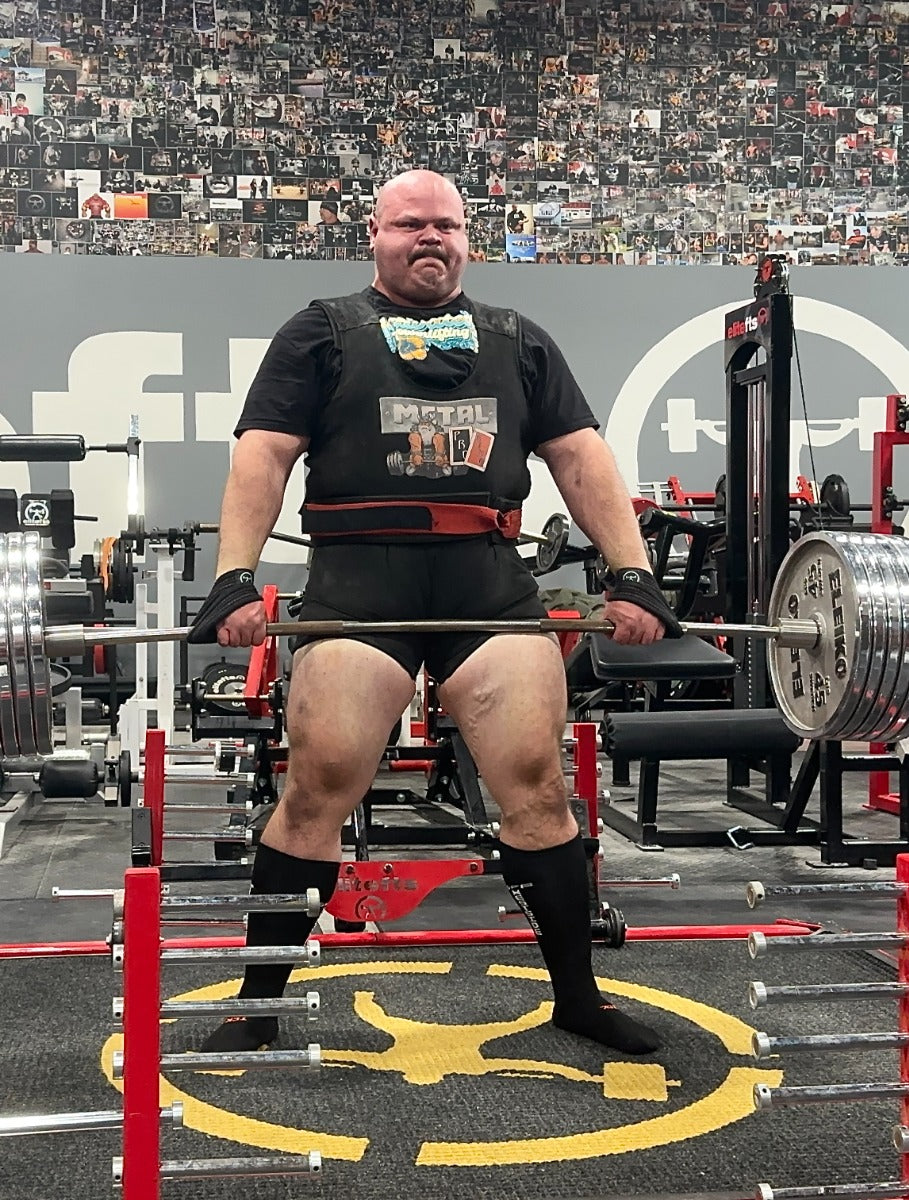
Enter Brad. For 22 years, Brad has worked as a firefighter and paramedic on a demanding 24-hours-on, 48-hours-off schedule that systematically disrupts his sleep. He’s also a competitive powerlifter and a father. Recently, he faced an almost impossible scenario: a major promotional exam and the SPF World Championship powerlifting meet, scheduled just four days apart in the same week.
This wasn't just a strict schedule; it was the culmination of a neurologically demanding training cycle that left him, just one week prior, physically "smashed," mentally exhausted, and "shaking like a leaf" simply holding a heavy barbell. Instead of collapsing, Brad used a holistic system for managing his body's stress response and redirecting energy toward cognitive and physical output. This article distills the five most impactful takeaways from his protocol—practical tools anyone can use to move from merely surviving sleep deprivation to actively thriving despite it.

1. Your Brain Needs Creatine, Too—Especially When You're Exhausted
The first protocol for the morning after a stormy night's sleep is a high dose of creatine, typically between 15 and 25 grams. This isn't for building muscle; it's for managing your brain.
Poor sleep prevents the brain's glymphatic system—its waste clearance crew—from doing its job. This leads to a buildup of metabolic waste and what can be described as "cerebral inflammation," a key reason you feel foggy and slow after a rough night. A high dose of creatine helps directly combat this neurological stress, mitigating the cognitive damage.

That feeling of 'brain fog' isn't just fatigue; it's a physiological state of low-grade neural stress. This protocol treats the root cause, not just the symptom. This is a surprising takeaway for many who associate creatine exclusively with athletic performance and a standard 5-gram daily dose. It highlights the supplement's powerful, often-overlooked cognitive benefits.
"People forget that creatine does cool things outside of just saturating muscle tissue. We have these powerful cognitive benefits, and a growing body of research is looking at its effects on sleep deprivation."
While creatine addresses the chemical aftermath of poor sleep, the following strategy provides immediate control over the nervous system's response to disruption.

2. Instantly Control Your State with Strategic Breathwork
When you’re woken abruptly in the middle of the night, whether by an emergency tone or a crying baby, you need to be instantly alert, but reaching for a stimulant like caffeine is a trap; its long half-life will sabotage your ability to fall back asleep later. Breathwork offers a free, instant, and side-effect-free alternative.
The "Alertness" Drill (To Get a Sympathetic Jolt):
This controlled breath-hold creates a brief, safe spike in CO2, triggering a release of adrenaline and noradrenaline that instantly sharpens your focus.
- Take a small breath in through your nose.
- Breathe most of it out.
- Pinch your nose and hold the exhale.
- Recover and repeat a few times.
- Crucial Safety Note: "The point is not to push the breath hold as hard as you can." This is about creating a quick physiological shift, not winning a competition.
The "Calm" Drill (To Get Back to Sleep):
After the disruption is over, you need to quickly guide your body back into a parasympathetic (rest) state. An elongating exhale drill is particularly effective. You extend the length of your exhale with each breath (e.g., exhale for 1s, then 2s, then 3s, all the way up to 10s, then repeat the cycle). The intentional complexity is the key; it forces you to focus on the count, preventing your mind from drifting into the anxious, racing thoughts that keep you awake.
Mastering these drills gives you direct command over your nervous system. This is not just a coping mechanism; it's a fundamental skill for anyone operating under pressure.

3. The Most Powerful Sleep "Gadget" is Free (And Attached to Your Arm)
The wellness market is flooded with expensive gadgets that promise to stimulate your Vagus Nerve to promote relaxation and improve sleep. These devices can cost hundreds of dollars and often deliver underwhelming results.
Brad found a simple, manual Vagus Nerve massage to be a "game changer"—significantly more effective for him than any pricey tech. This technique can be learned in minutes from a free online video and requires no financial investment whatsoever.
This is a crucial lesson in the world of performance optimization: before investing in expensive technology, master the analog tools your body already possesses. The most profound changes often arise from the most straightforward and consistent inputs.
"It was a game-changer that I learned from a YouTube video. I didn't realize people were selling expensive gadgets that do something you can do for free with your own thumb."
4. Upgrade Your Sleep with a Targeted Supplement Stack
To get the most restorative value out of whatever sleep is possible, Brad uses a consistent supplement stack. This isn't about replacing sleep; it's about making every minute of it count.
-
Melatonin (20mg): Beyond setting the circadian rhythm, melatonin is one of the body's most potent antioxidants. A higher dose (a dose typically used for its potent anti-inflammatory effects, not just for sleep onset) helps the brain recover from the inflammatory stress of a poor night's sleep. The myth that it shuts down natural production has been thoroughly disproven.
-
Magnesium Taurate (800mg): This specific form of magnesium works by binding to and partially inhibiting your beta receptors—the same receptors adrenaline wants to bind to. By occupying these sites, it blunts the stimulating effects of adrenaline. Think of it as putting noise-canceling headphones on your nervous system, turning down the volume on your body's stress signals.
- Glycine: This "dirt cheap" amino acid also helps inhibit adrenaline through a different mechanism than magnesium. It can be taken in very high doses with no reported adverse side effects, making it another powerful tool for relaxation and winding down.
A critical nuance is context. Brad avoids high-dose melatonin on work nights, as the deep sleep it induces can cause grogginess, a dangerous state for a first responder. His off-day protocol involves a larger dose on his first night off to combat inflammation and reset his circadian rhythm, followed by a smaller dose on the second night, demonstrating the importance of tailoring any protocol to your specific circumstances.
5. "Warm-Up" Your Brain Before a Big Mental Workout
The analogy is simple but profound: we religiously warm up our bodies before a heavy training session, so why don't we warm up our brains before intense mental work? For his grueling study sessions, Brad developed a 20-minute cognitive warm-up to prepare his brain for learning.
-
Fuel the Brain: He began by taking specific nootropics like Alpha GPC, tyrosine, and intranasal creatine. This provides the raw materials for sustained focus and motivation, with the intranasal creatine offering a more direct and rapid cognitive benefit than the oral dose.
-
Activate Both Hemispheres: He performed a unique writing drill: write the lyrics of a fast-paced song in cursive as one long, unbroken sentence, then read it aloud quickly. This forces the left and right hemispheres of the brain to communicate with each other. This cross-hemisphere communication is akin to waking up your entire cognitive orchestra, rather than just one section, thereby preparing the brain for complex problem-solving and fluid thinking.
- Engage in Neuroplasticity Games: He used the Elevate app to play a few short, targeted brain-training games to prime his mind for a new challenge.
This routine does more than "wake up" the brain. It actively primes the neural circuits for learning and concentration, ensuring that the time dedicated to mentally demanding tasks is maximally effective.

From Surviving to Thriving
The central theme of Brad's success is that you don't have to be a passive victim of sleep deprivation. By using proactive, intentional tools, you can mitigate the damage and enhance your performance. The contrast is staggering: in one week, Brad went from feeling physically and mentally "smashed" to arriving at his world championship feeling better than "maybe ever."
For Brad, the most powerful outcome wasn't just acing an exam or hitting a PR. He found that implementing these changes had a profound ripple effect on his family life. By managing his own system better, he was able to be more focused, present, and engaged at home. This is the ultimate goal of any performance protocol: not just to achieve more, but to be more present and engaged in the life you work so hard to build.