

Troubleshooting Strength Injuries: Dealing with Injury
For those of you who are currently dealing with a significant injury, this article, the fifth and final part of the Troubleshooting Strength Injuries series, will help serve as a road map to recovery.
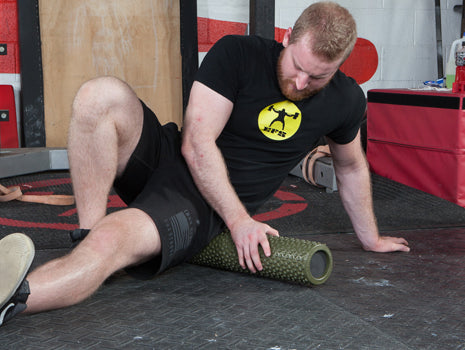
FAI and the Rehab Process: The IT Band as the Root of All Problems
Soft tissue therapy is an undeniably important aspect of the rehab process of Femoro-Acetabular Impingement, but there's a commonly overlooked aspect as well: the iliotibial band, or IT band, which is often a major player in the cause of FAI.
Troubleshooting Strength Injuries: How to Autoregulate
Autoregulation is about being able to gather as much information as possible to assess the current situation and knowledge. Once you know that, you can apply this knowledge to autoregulate your training... but you'll need to learn a couple of skills first.

WATCH: SSTSS Presenter Dr. Kinakin on Weightlifting Injuries in Athletes
With all of his credentials, it’s no wonder Dr. Ken Kinakin has been a speaker at elitefts seminars — and he’ll be taking up the role again for the upcoming 2019 Strong(er) Sports Training and Success Summit. Here are the topics he'll be presenting on.
Femoro-Acetabular Impingement and the Rehab Process: The Diagnosis
Femoro-Acetabular Impingement (FAI) can often be asymptomatic and will not affect some people’s daily lives — even who test positive to the diagnostic procedures. However, that does not mean that the management of FAI should be ignored, as it may be a factor in hip osteoarthritis in later life.

Troubleshooting Strength Injuries: What is Autoregulation?
There's a sweet spot where stressors are present as motivating and growth factors but not too much to where athletes become chronically sympathetic, causing a cascade of performance-altering events. This spot is called autoregulation.
Troubleshooting Strength Injuries: Warning Signs of Injury
Understanding the warning signs and red flags of injury are paramount to successfully pushing your body to the brink without derailing due to injury. So what signs did our example athlete miss in the previous article?
An Epic Q&A with Dr. John Rusin and Dave Tate
Is Dave still following Dr. Rusin’s protocol? What are Dr. Rusin's top-two training takeaways working with Dave? In this Q&A, Dave Tate and Dr. John Rusin share their overall experiences from video series "Fixing Dave Tate" and "Breaking John Rusin," and more.

How Irradiation Can Be Detrimental
Even though Instagram makes neural irradiation look cool, please take a moment to stop and ask yourself: What is it, and why are you doing it?
WATCH: I am Dr. Tyrel Detweiler
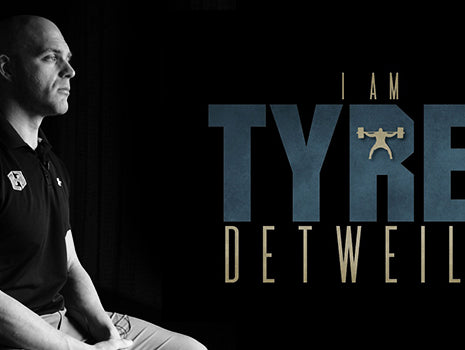
Meet Dr. Tyrel Detweiler, a former college football player-turned-chiropractor who opened Hybrid Performance Group in Columbus, Ohio. Hybrid Performance Group is a multi-disciplinary clinic that offers chiropractic and physical therapies for athletes and active people.

Troubleshooting Strength Injuries: Redefining Injury
Most strength athletes either take matters into their own hands or seek advice from other lifters to rehab and troubleshooting an injury. Read that again. If I'm describing you, this series is for you.
A Basic Lifting Skill Review: Grip Strength
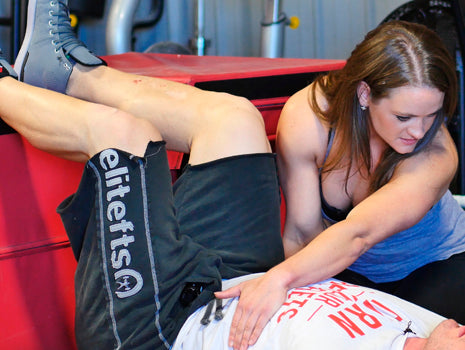
Every seasoned lifter appreciates how easy it is to lose simple habits in pursuit of getting stronger. One such habit: Getting a good grip.

The Intent of Recovery
Intelligent training does NOT need to be pussyfooting around HARD training. It also doesn’t need to be pushing you to a point where you have to “deserve” a rest day. Attending SWIS 2018 and listening to Dr. John Rusin and Christian Thibedeau, I thought it would be great to revisit this topic.

Should Kids Play Youth Football?
I will never tell a parent they are right or wrong for enrolling their child in a contact sport such as football. What I do recommend, however, is that parents ask themselves three important questions before putting their kid into a contact sport.
The Value of Accessory Work
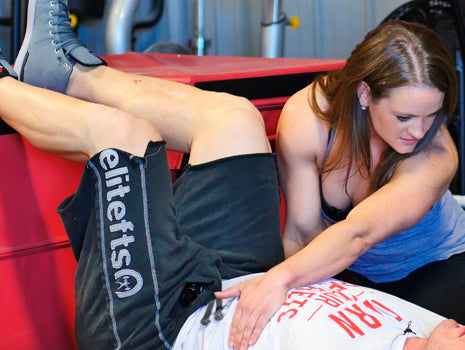
I’m as guilty as anyone when it comes to moving a weight that makes me “feel good” about training, versus doing a movement that requires less weight on the bar because it exposes weakness.
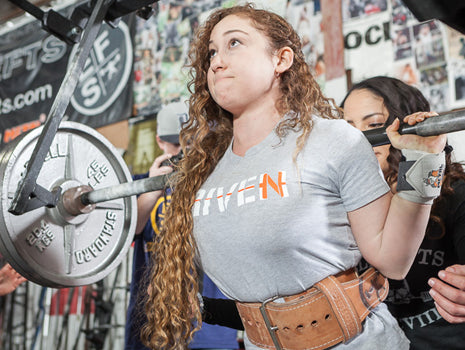
How to Rehab a Fracture When You’re Too Stubborn to Listen
By no means is this article medical or technical advice to anyone on how to keep training through an injury, but instead, it’s a story of how I handled mine. Why? Because I believe that sometimes, guidelines are meant to be broken.
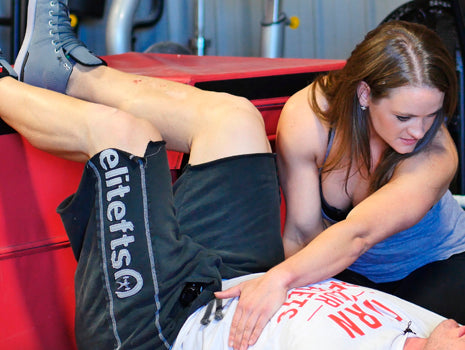
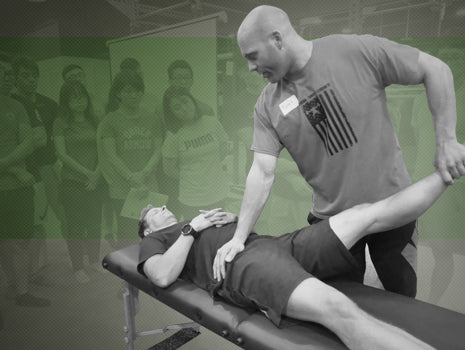
The Importance of Recovery for Youth Athletes
To all teenage high school athletes, you must learn to respect and take care of your body if you expect to have a long career in any sport. I cannot tell you how many talented individuals I’ve seen who were never able to live up to their potential due to injury.

4 Things Your Body Needs to Stay Symmetrical
As a PT, I made the mistake of letting go of these good habits. By ignoring issues when they arose, I put my body in a compromising state.
WATCH: Question & Answer Session with Dave Tate
Dave sits down to answer key questions that he received over the course of the Fixing Date Tate Series. Dave discusses everything from his biggest takeaways, to lessons learned, overall project goals, lifestyle changes, and the importance of effectively auto-regulating your own training program.

My RPR Level I Certification Workshop Experience
So, how does this voodoo work? Honestly, I’m not sure. I don’t really care, though, because I know it works and has been a big asset to my training during the past couple of years.

Movement Patterns Beyond One Plane
If you’re looking a little shifty, if you’re feeling aches and pains on your competition movements, if you want a longer shelf life, if you want to feel athletic instead of “locked in” all of the time, finish your sessions with this. I promise you'll move and feel better.

Make Recovery Great Again
Your ability to recover is arguably one of the most misunderstood and undervalued aspects of strength and conditioning. As a goal oriented and driven lifter (possibly Type A too), avoid these common pitfalls.

Minimizing Pain for the Active Meathead
Still want to play softball, play basketball, practice martial arts, hike, bike, and swim? Although these things are extremely fun and I highly recommend them for mostly everyone, they can certainly take their toll on your body, especially when combined with hard training.
