


3 Ways to Better Utilize Compression Floss Bands
Whatever you want to call this tool (compression tape, floss band, voodoo bands, or something else) it can be incredibly useful in ways often overlooked.

WATCH: Fixing Dave Tate — Adjustments to Upper Body Training for Phase 3
With two phases of training complete, the upper body training days must now be adjusted to continue Dave's progress. This is the new plan.

WATCH: Fixing Dave Tate — Implementing the Lower Body Training Adjustments for Phase 3
Dr. Rusin already explained the alterations to Dave's program after the first two phases. Now it's time to see them in action.
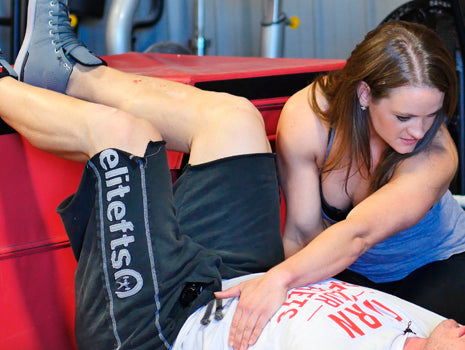
The Acute Phase of Injury: What Just Happened?
Once you’ve started the waiting game and it has sunk in you’re out of training for a while, there are definite ways to set yourself up for success. This is something I'm currently experiencing myself after tearing the adductor longus tendon from my pelvis.
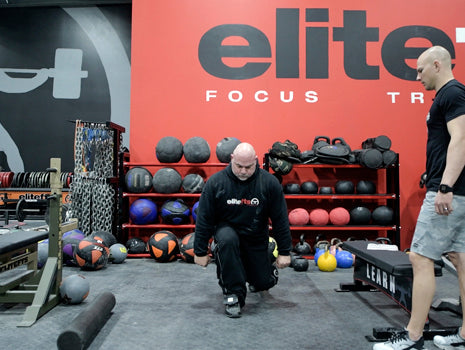
WATCH: Fixing Dave Tate — Adjustments to Lower Body Training Days for Phase 3
Now that Dr. Rusin and Dave checked in and reviewed the previous progress, it's time to make some changes to both the max effort and dynamic effort lower body training days.
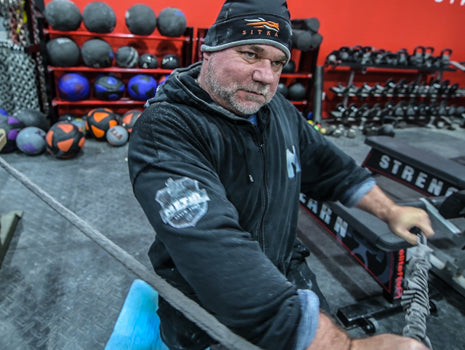
WATCH: Fixing Dave Tate — The 10-Week Update Discussion
Dr. Rusin returns to the elitefts headquarters to get an update on Dave's progress through two training phases.

WATCH: Fixing Dave Tate — Programming the Six-Phase Dynamic Warm-Up Sequence
The goal is to rebuild Dave's foundational movement patterns, and the first step is to begin each training session with one of two 15-minute sequences. Here's the method behind the madness.

WATCH: Fixing Dave Tate — Observing Dave's Current Training Capabilities
To gain a greater understanding of Dave's current capabilities, Dr. Rusin watches a full training session of six movements.

Four Simple Mistakes to Avoid to Stay Injury-Free
These are what I’d consider the biggest mistakes in letting injury dictate your ability to train.

WATCH: Fixing Dave Tate — The Three Areas of Focus Discovered During Initial Evaluation
With the discovery phase nearly complete, Dr. Rusin has identified three key areas that will be imperative for Dave moving forward — hip stability, posterior chain upper quadrant stability/thoracic spine cage mobility, and program formation.

Tissue Load vs. Tissue Capacity: Increasing Tissue Capacity While Altering Training Load
This second article of the series discusses additional loading concepts, training considerations, and rehabilitation protocols for increasing tissue capacity while maintaining or decreasing training load.

WATCH: Fixing Dave Tate — Orthopedic Evaluation
Whereas the previous screen was intended to identify red flags, this assessment will consist of clinically-based testing to produce both a medical diagnosis and a functional movement capacity diagnosis.

Back to the Platform After Injury: David LaMartina's Lessons from the Rehab Process
There are so many layers wrapped up in recovery and getting back to competition. These are the key points that Dave had to embrace if he wanted to keep training for the next 10 years.
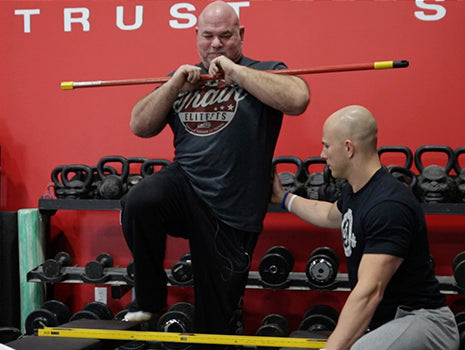
WATCH: Fixing Dave Tate — Movement Screening
The initial assessment is complete and it's time for some hands-on evaluation of Dave's movement, using these seven key movements. The compensation patterns and pain indicators observed in this step will be used in the next phase of the process.

Tissue Load vs. Tissue Capacity: A Key to Injury Recovery and Prevention
One of the most common causes of injury is accumulation of load on a tissue, tendon, or ligament that exceeds that tissue, tendon, or ligament's capacity. For optimal rehabilitation and recovery, you need to understand and manage this relationship.

Back to the Platform After Injury: The Three Main Components of David LaMartina's Rehab
In order to get to the point of actually getting better and taking rehab seriously, a lifter must be willing to shift from short-term to long-term focus. Here's what we did and how I think most rehab for strength athletes should be structured.

Increase Muscle Mass with Massage
If you're looking for a way to restore muscle function and promote muscle growth, a trip to the massage table may be the answer.

Revisiting Tonic and Phasic Muscles for Increased Performance and Position
There may be a strength discrepancy between your anterior and posterior chain, but are you sure this isn't because some muscles are stuck doing a job they weren't originally intended to do, in a position that isn't optimal?

Back to the Platform After Injury: The First Steps
Dave LaMartina is one of the hardest working lifters I've met, and has proven over many years that he is willing to train through just about anything. After significant injury led to him stepping off the platform, he reached out to me, and this is how he came back.

Is Inflammation the Bad Guy?
Inflammation is your body’s biological response to harmful stimuli, which in this case is the damage induced to your muscles from training. But trying to ward it off with NSAIDs and ice may be a mistake.

Yoga for the Serious Strength Athlete
This practice is useful for avoiding development of dangerous muscle imbalances, muscle tears, and joint impingements — but that's just the start of what it can do for your training and your life.

5 Training Staples for Your Off-Season
When the time rolls around to start prepping for your next competition, you'll wish you'd used your off-season wisely. Here are the five things you should focus on to provide the most improvement, longevity, and resilience.

The Candle Protocol for Deeper Sleep
What you will find in this article is an easy-to-implement solution that will have a quicker, more impactful, and longer-lasting effect on your health, your physique, and your progress than anything you’ve ever done before.

Common Behaviors of Lifters Who Know How to Improve
Lifters who succeed share a lot of qualities — and so do lifters who fail. I'd challenge you to honestly evaluate how closely you fall on the spectrum of each of these qualities.
